- Role
- Product designer, solo
- Timeline
- Spring 2026
- Research
- 25-person survey, 4 interviews, 8 usability tests
- Built with
- Figma
TL;DR
Can you check a product's ethics in the aisle, in under three minutes?
The problem
Most shoppers I surveyed have three minutes or less in the store. The apps they could use turn messy evidence into one number and hide the sources.
What I made
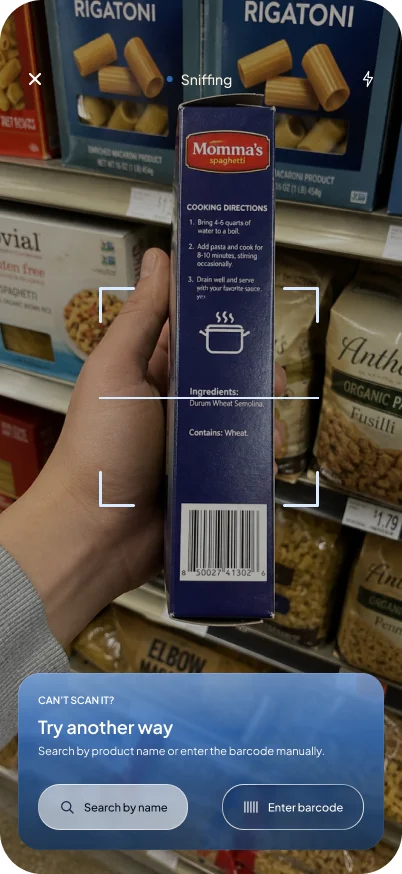
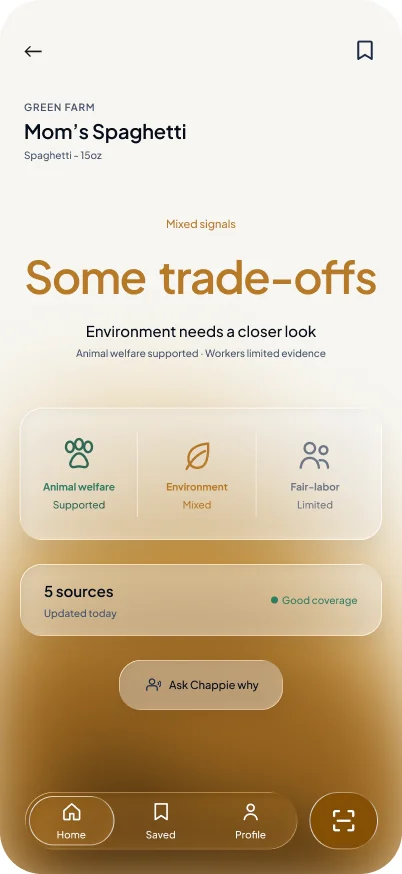
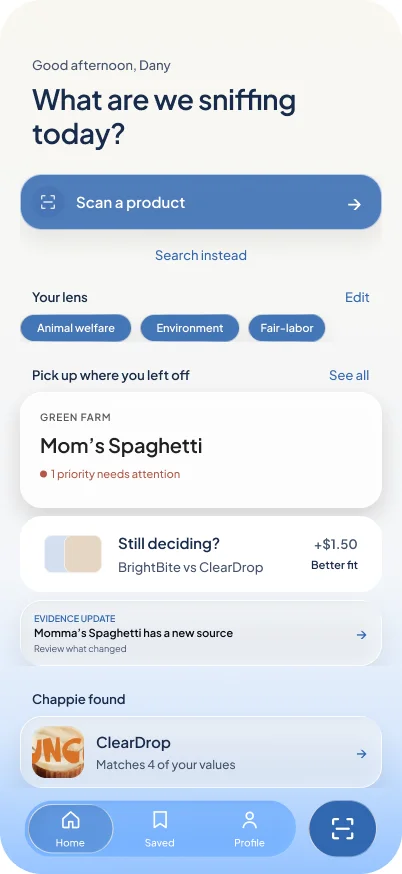
Chappie scans a product and gives one of four verdicts, with the reasoning and dated sources under it. When the evidence is missing, it says so.
My part
All of it, solo: a 25-person survey, 4 interviews, an audit of 10 apps, the Figma prototype and 8 usability tests.
01The problem
Shoppers have less than three minutes and no tool they trust
I started with my own habit of checking products in the aisle with ChatGPT and getting old, contradictory answers. Then I asked other shoppers. 18 of 25 said they have three minutes or less to research a product in the store, and 19 had bought something that later clashed with their values. Not one of them used an app in the store.
Survey on Google Forms, 25 responses, Spring 2026
Under 30 seconds: 4. 30 seconds to 1 minute: 9. 1 to 3 minutes: 5. Recruited through friends, family and classmates.
18 of 25have three minutes or less to research a product in the store
19 of 25bought something that later clashed with their values
0 of 25used an app in the store
02The audit
8 of 10collapse a product into a single score
0 of 10put sources next to the verdict
2 of 10admit when they don't know
Existing apps turn messy evidence into one number
I audited ten ethical-shopping apps, including Yuka, Good On You and Think Dirty. Eight collapse a product into a single score, none puts its sources next to the verdict, and only two admit when they don't know.
Competitive audit of 10 apps
Yuka, Think Dirty, EWG Healthy Living, Open Food Facts, Good On You, GoodGuide, HowGood, Buycott, Giki and CodeCheck.
03The verdict
Four verdicts, one of them "not yet"
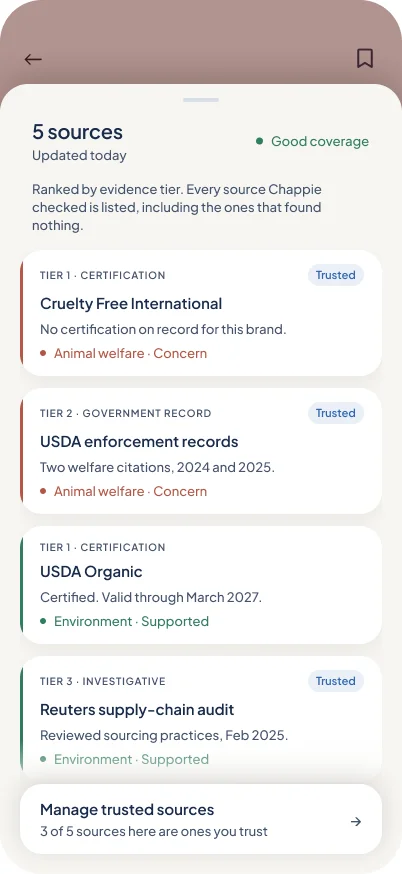
In my four interviews, every shopper named a brand they stopped trusting after one mistake came out. They trusted proof they could check. So Chappie gives one of four verdicts: Pass, Caution, Fail and Not Yet. Not Yet means the evidence is missing. The reasoning and dated sources sit under the verdict, and the app never makes the moral call.
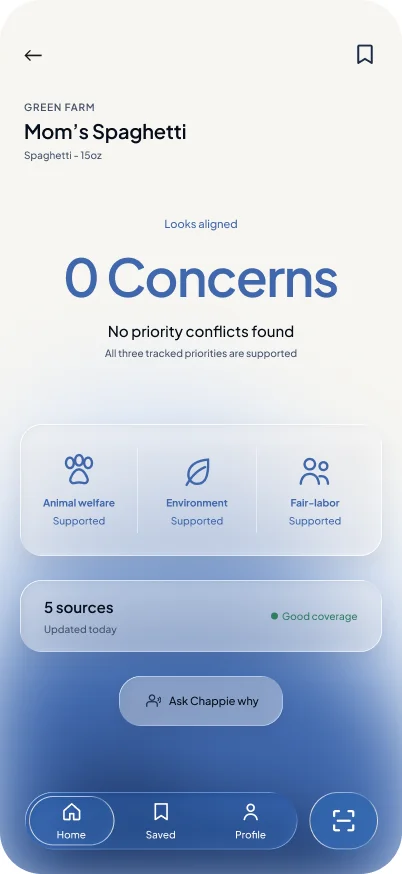
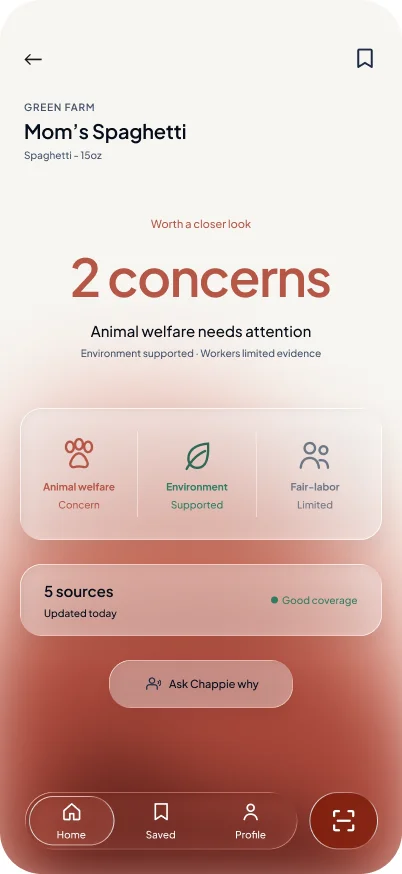
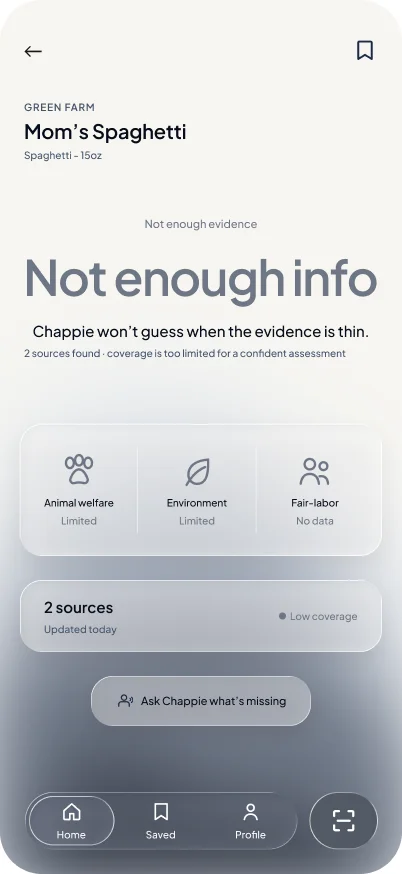
The proof sits next to the verdict
A verdict is hard to trust when its proof is somewhere else. Putting sources on the same screen means more information, so the hierarchy has to stay strict: verdict first, proof second, details on demand.
04Testing
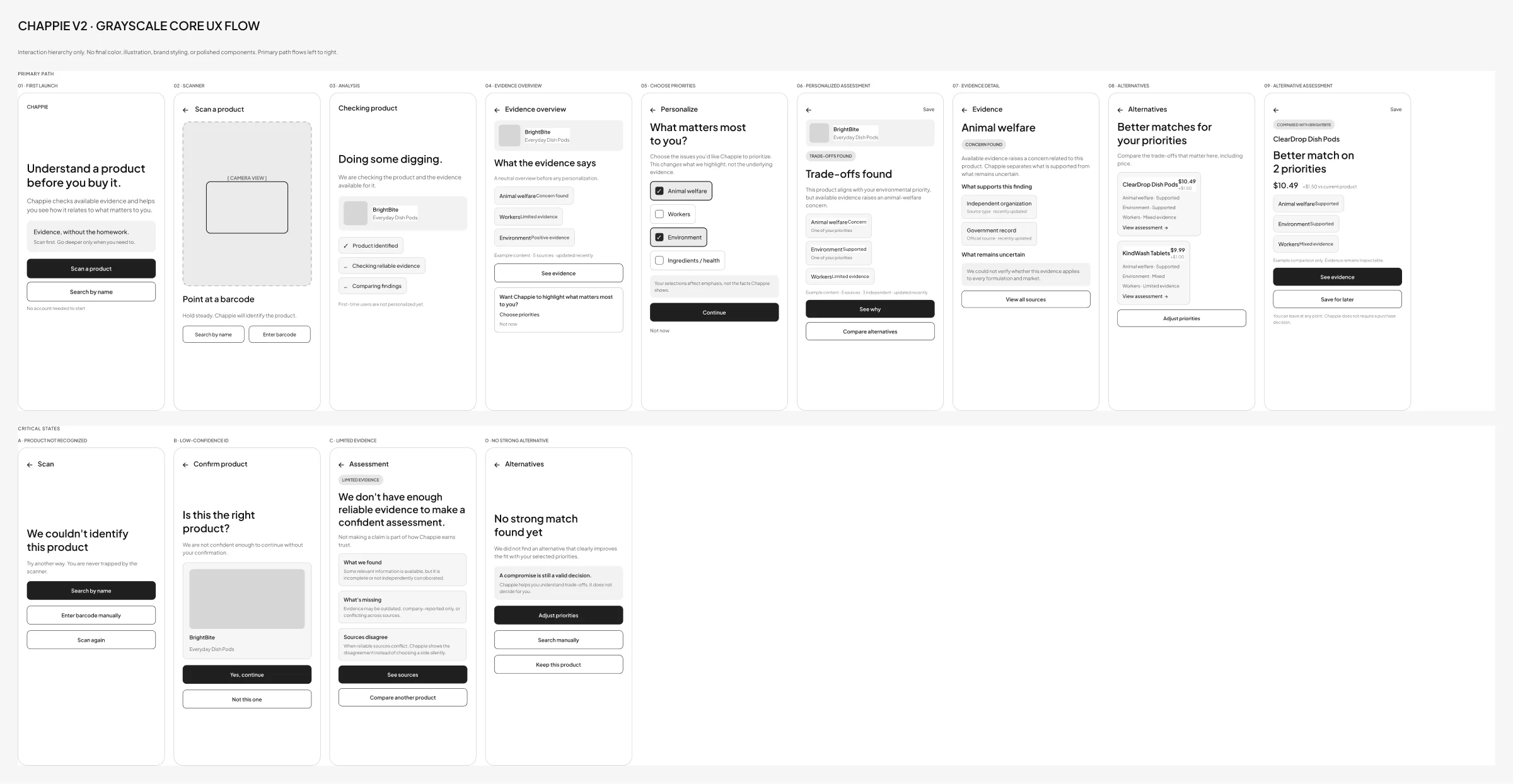
Testing changed three screens
I ran moderated remote sessions with eight people on the Figma prototype. On average they read the verdict and explained it in 6 seconds. Seven of the eight said Chappie would change which brands they keep buying.
8 participants, moderated remote sessions on mobile, Spring 2026
Average time to identify the verdict and explain what it meant.
6 secon average to read the verdict and explain it
7 of 8said it would change which brands they keep buying
3 of 8mixed up similar labels
- 01
SaveThe save button moved into the verdict card.
- 02
CautionCaution verdicts now suggest alternatives that pass.
- 03
LabelsThree people mixed up similar labels like Cruelty-free and Certified Humane, so I added short definitions to value selection.
05The Guardian
A calmer way to follow brands
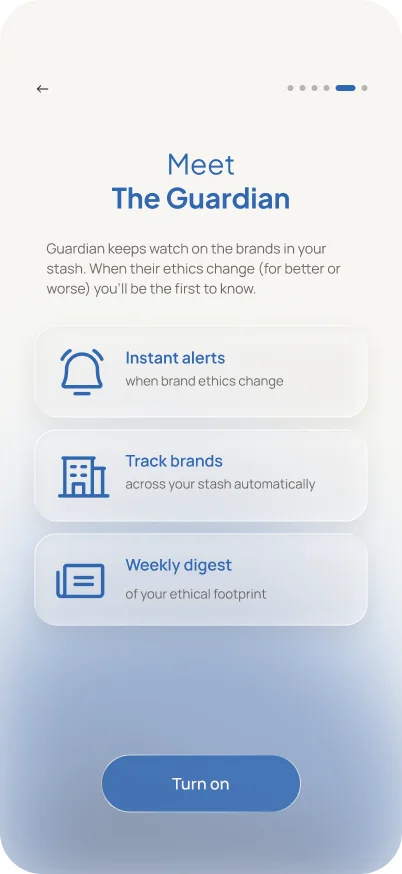
Design critique pushed back on real-time alerts about saved brands, because they can raise anxiety without helping anyone decide. So I designed the Guardian, a weekly recap with sources, and kept it outside the core flow until the scan works well.
06Next